Line Pumping Service
in Connecticut and New York
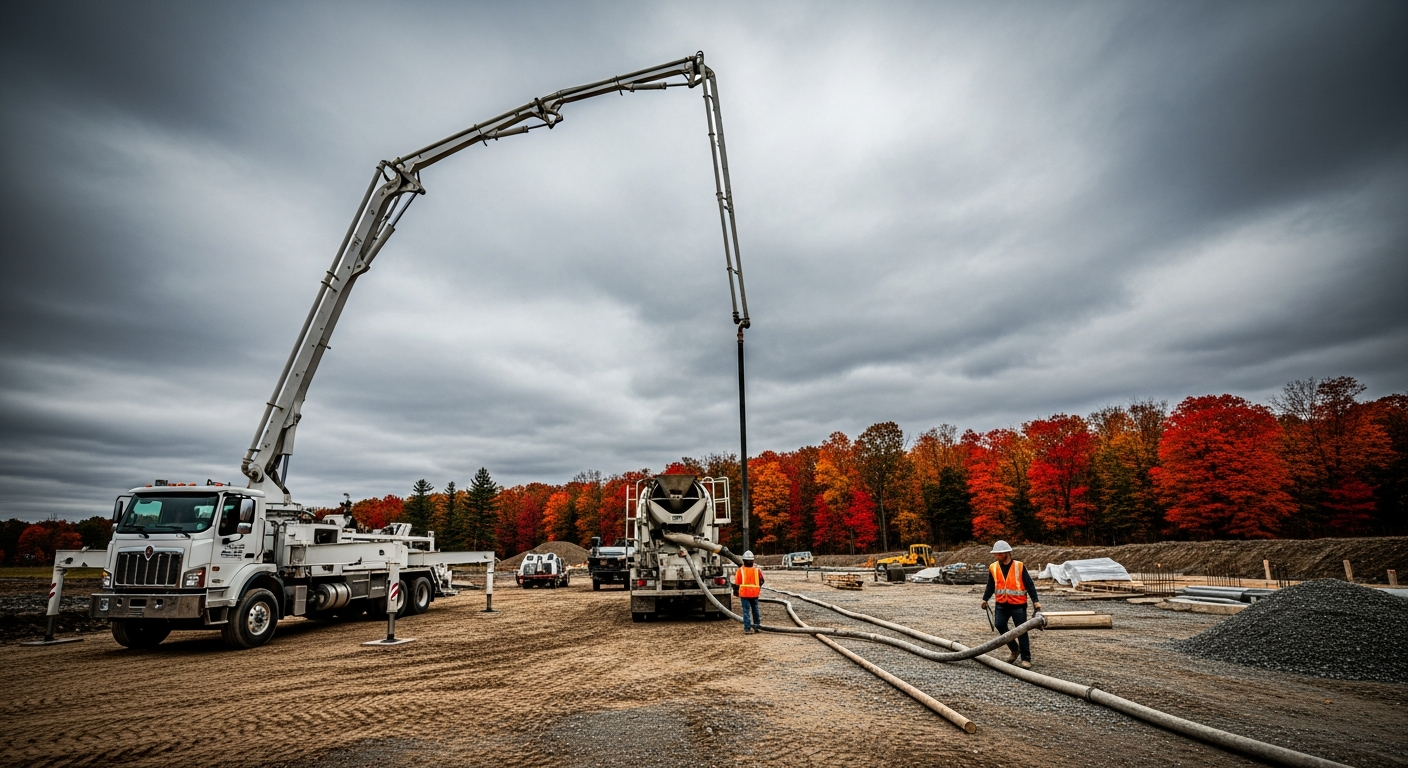
Line pumping delivers concrete at grade through a hose run from the pump truck to the pour location — the right method for flatwork, confined spaces, and sites where overhead reach is not needed. Hat City Concrete Pumping provides line pump service for residential and commercial projects throughout Connecticut and New York, with ACPA certified operators out of Danbury CT and Brewster NY.
Call (203) 790-7300 (CT) or (860) 467-1208 (NY) for a free estimate, or see our full concrete pumping services.
What Is Line Pumping and How Does It Work?
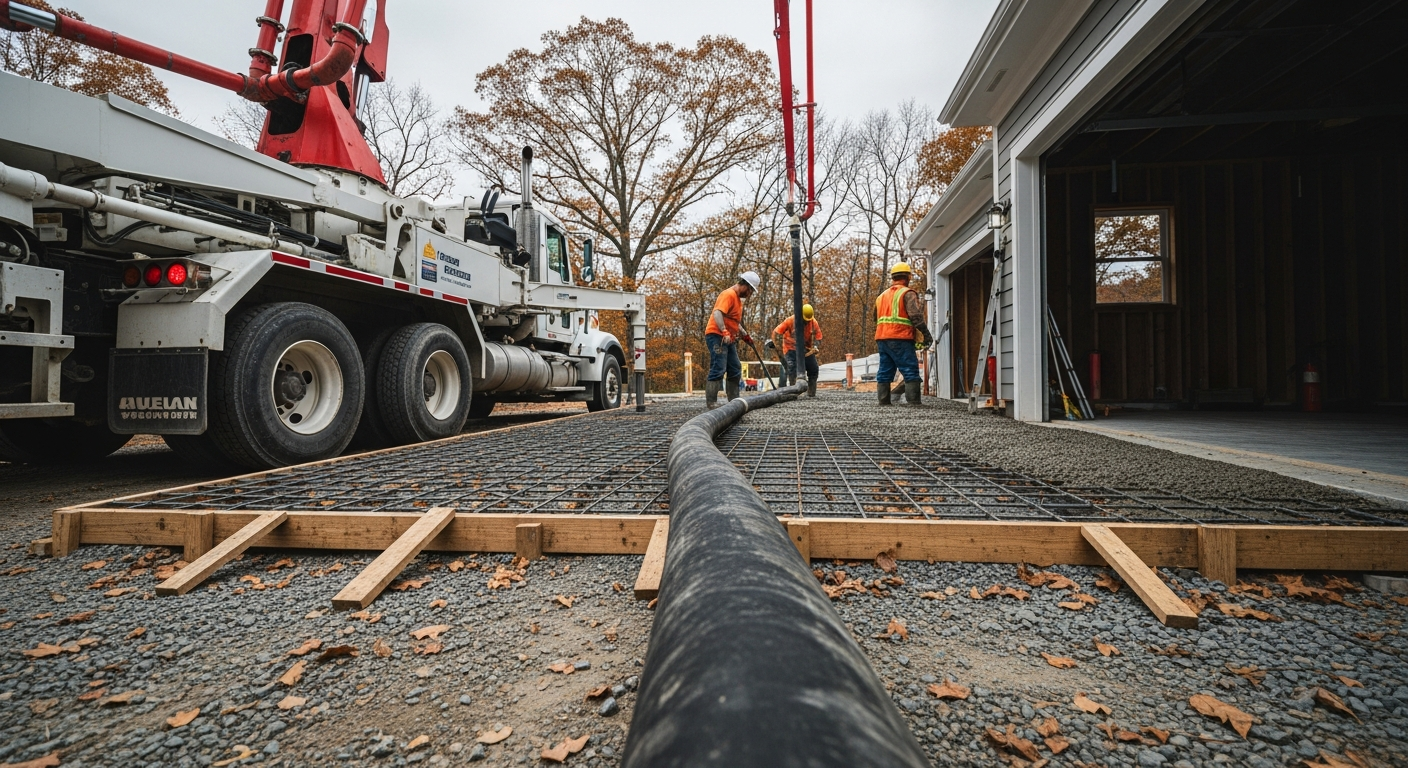
Line pumping pushes concrete through a ground-level pipeline or hose run from the pump to the pour location. Instead of placing from above through an elevated boom arm, line pumping delivers at grade — the hose follows the ground from the pump truck to wherever the pour is happening.
The pump truck forces ready mix from the hopper through the pipeline using hydraulic pressure. The hose can work around corners, through doorways, and into areas where a boom arm cannot reach effectively. Hose sections connect end-to-end, so the run can extend as far as pump pressure and mix design allow.
Line pumping is used for slabs, flatwork, footings, grade beams, and confined-area pours where concrete placement is happening at or near grade level. A pump hose delivers continuous volume without the crew stopping to reposition — far faster than wheelbarrow methods for most flatwork projects.
When Should You Choose Line Pumping
Over a Boom Pump?
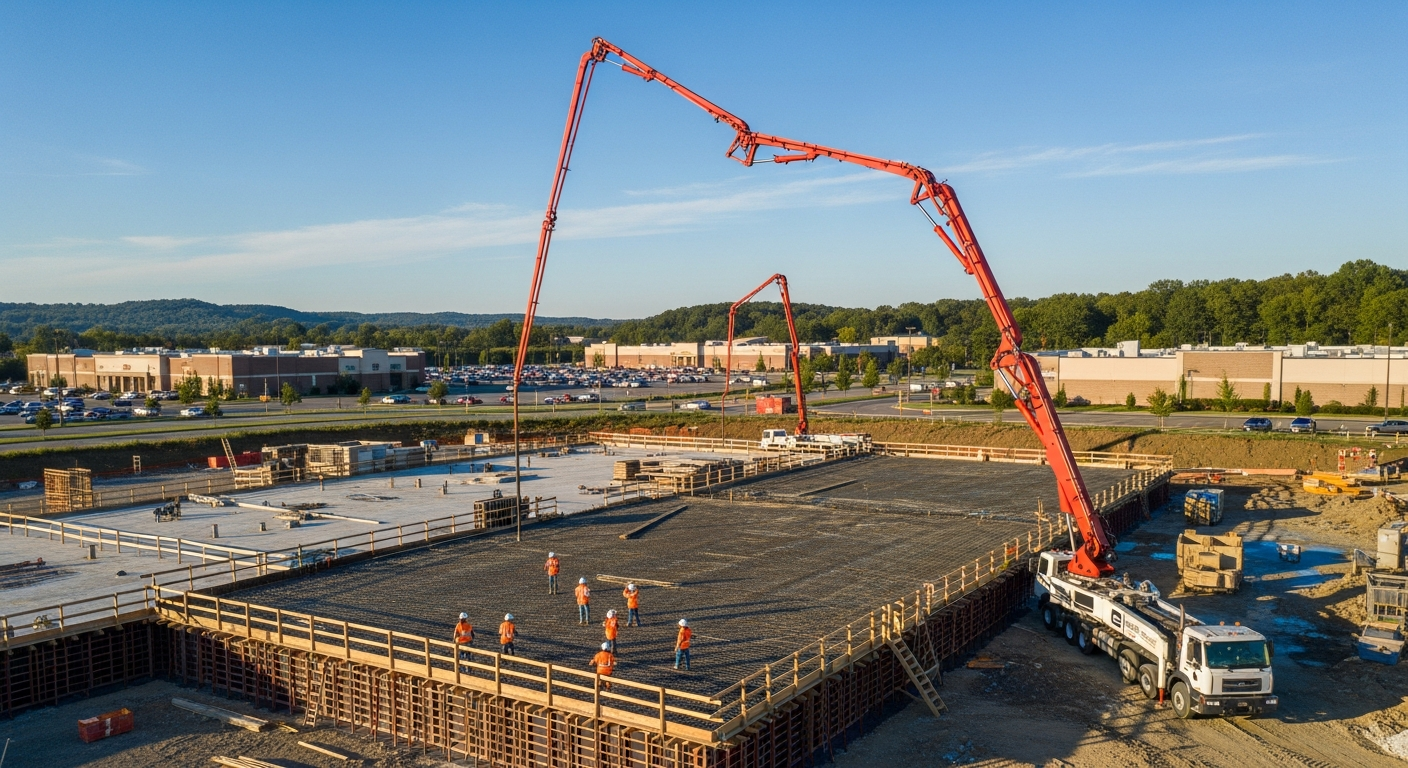
Line pumping is the better fit for grade-level pours, overhead-obstructed sites, and confined spaces where a boom pump would struggle to operate efficiently.
Grade-level flatwork is the clearest case. Garage floor, driveway, patio, slab on grade — concrete needs to go down, not up. Running a pump hose to the pour is direct and efficient. No reason to deploy a 40-meter boom and sweep the arm over the site when a ground line gets it done.
Low structures, power lines, and tight building overhangs can prevent a boom from raising safely. Line pumping removes the overhead problem entirely since concrete delivery happens at grade. Our operators evaluate site conditions on every job and recommend the approach that works for actual conditions on the ground.
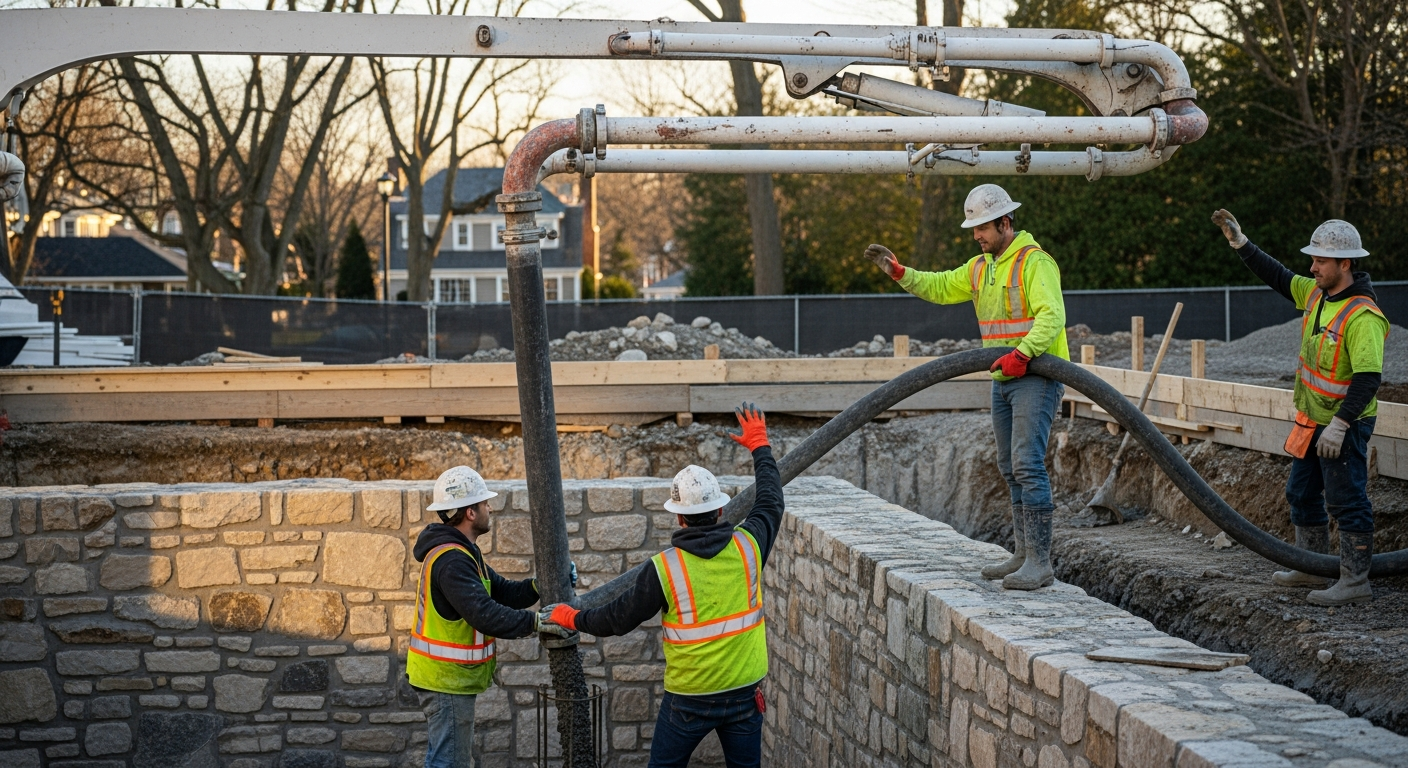
Crawl space pours, below-grade areas, and openings too narrow for a boom arm often need concrete run through a hose rather than placed from above. A pump hose can thread through a doorway or crawl space opening where a boom has no path.
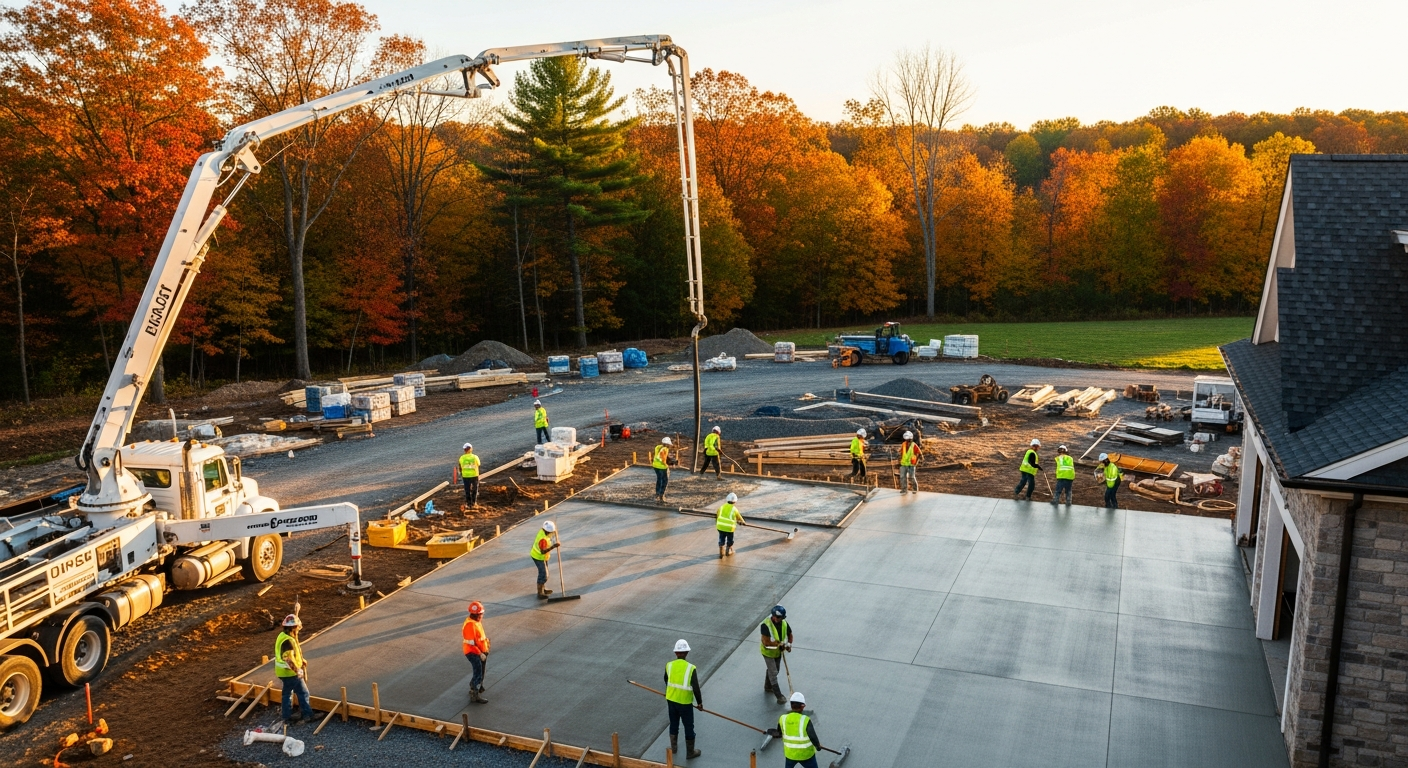
A boom pump is the better call when you need vertical reach for elevated slabs, concrete placement over obstacles, or when pour volume and speed are the top priorities.
What Projects Use Line Pumping?
Line pumping covers a wide range of residential and commercial concrete work where ground-level or confined-space delivery makes the most sense. Most flatwork, footing, and below-grade pours fall into this category.
Residential Applications
On the residential side, garage floors are one of the most common line pump applications. The truck sets up at the driveway, runs hose into the bay, and the pour proceeds without any boom reach needed. Basement floor pours work the same way — run hose down through the opening and concrete goes where it needs to go. Driveways, patios, walkways, and slab-on-grade construction all follow this pattern. See our residential concrete pumping services for more on what we do for homebuilders and homeowners.
Commercial Applications
On the commercial side, ground-level slabs, grade beams, and footing pours are regular line pump jobs. Large areas of flatwork at grade benefit from a pump hose that follows the pour front without repeatedly repositioning equipment. Grade beams and strip footings that run along a building perimeter are handled by moving the hose along the beam as the pour progresses. Our commercial concrete pumping services cover this work throughout the region.
Industrial Line Pumping
Industrial line pumping includes equipment pads, utility corridor pours, floor slab replacements inside existing buildings, and infrastructure work in areas with limited overhead clearance. When site conditions constrain setup options, running concrete at grade through a pump hose is often the most practical answer. The pump handles the volume; the crew can focus on consolidation and finishing rather than moving material manually.
How Does Hat City Provide Line Pumping?
Hat City Concrete Pumping provides line pumping by running a high-pressure pump hose as a ground line directly off our boom pump trucks to the pour location. We do not use separate trailer-mounted pump units. Our boom pump trucks handle both boom placement and ground-level hose work — the same truck that places concrete at 130 feet of elevation on a commercial pour can be configured to run hose at grade on the next job.
Our operators carry the hose and fittings needed for a ground-line configuration and are trained on both methods. There is no need to schedule a different type of equipment — the trucks we operate cover both boom pump and line pump work. This keeps the setup simple for clients and reduces equipment on tight sites.
The process is straightforward: the ready mix truck backs to the hopper, concrete is pushed through the pump, and it travels through the pipeline at ground level to the pour. Our ACPA certified operators manage pump operation, monitor pipeline pressure, and keep the pour moving at a consistent rate throughout. You call us, describe the job, and we bring the right setup.
For a broader view of our operation, visit the services page or reach out through our contact page.
How Much Does
Line Pumping Cost?
Line pump service pricing depends on pour duration, hose run distance, and travel from our Danbury CT or Brewster NY locations. Because Hat City uses boom pump trucks for both boom placement and line work, the base truck rate applies to both service types. The mix design, total cubic yards ordered, and any hose extension requirements also factor into the overall cost of the pour. Tight confined-space jobs where setup takes longer than a straightforward driveway pour are quoted accordingly.
For detailed pricing context, see our blog post on how much concrete pumping costs. Every project gets a free estimate based on the actual scope - call (203) 790-7300 (CT) or (860) 467-1208 (NY) for a quote tailored to your job.
-
Pour DurationLonger pours require more setup, operator time, and equipment commitment.
-
Hose Run DistanceExtended hose runs add labor, material, and pressure requirements to the job.
-
Travel from CT / NYDistance from Danbury CT or Brewster NY staging locations factors into mobilization cost.
-
Job ComplexityConfined-space or tight-access pours with longer setup are quoted accordingly.
Frequently Asked Questions About Line Pumping
Q Is line pumping slower than boom pump concrete placement?
Line pumping and boom pump service deliver concrete at similar output rates - both are driven by the pump's capacity. For flatwork and grade-level pours where the hose naturally follows the pour front, line pumping is very efficient. A boom pump has the edge on high-volume pours where it sweeps a wide area from a single position.
Q How far can a pump hose reach from the truck?
Ground-line runs of 100 to 300 feet are achievable under typical conditions. The practical limit depends on pump pressure, mix design, and hose diameter - longer runs create more friction in the pipeline. Tell us the distance from truck position to pour location during the estimate phase and we will confirm whether it is within range.
Q Does Hat City do line pumping for both residential and commercial jobs?
Yes. Hat City provides line pump concrete pump service for residential projects - garage floors, basement floors, driveways, slabs on grade - as well as commercial projects including grade-level slabs, footings, and grade beams. We serve Fairfield County, Putnam County, and the surrounding region from locations in Danbury CT and Brewster NY. Call (203) 790-7300 or (860) 467-1208 for a free estimate.
Q Do I need a boom pump or line pump for my project?
Line pumping works well for grade-level flatwork, confined-space pours, and sites with overhead obstructions. A boom pump makes more sense for elevated pours, multi-story work, reaching over obstacles, and high-volume commercial pours. If you are not sure, call us or read our boom pump vs. line pump guide and we will help you decide based on your specific site.
Still have questions? Our team is ready to help you plan the right pump setup for your pour.
Get a Free Estimate for Line Pump Service in CT and NY
Hat City Concrete Pumping has been serving Connecticut and New York contractors since 2014. Our ACPA certified operators understand the range of concrete pumping situations that come up across residential, commercial, and industrial work. Whether the project calls for a boom pump or a ground line, we set up for what the site and the pour actually need.
Call (203) 790-7300 (CT) or (860) 467-1208 (NY). Available Monday through Saturday, 6:00 AM to 8:00 PM. Reach us online through our contact page. Tell us about your project and we will give you a straight answer on method and cost.
Call Us Direct
(203) 790-7300Connecticut
(860) 467-1208New York
Mon – Sat
6:00 AM – 8:00 PM